Answers to Questions About Garage Door Repair in Los Angeles
Garage doors are heavy, complex systems that include springs, cables, rollers, tracks, panels, sensors, and an electric opener. A small fault can soon create a security problem, keep you from exiting your home, or create a significant injury risk. Whether you have an overhead garage door in Downtown Los Angeles, a sectional garage door in the San Fernando Valley, or an older door near the coast, the right repair depends on the cause of the problem, the door’s condition, and the availability of replacement parts.
This helpful guide explains common garage door failures, typical garage door repair cost ranges, spring and opener pricing, repair-versus-replacement decisions, and how to choose a local technician in Los Angeles. Prices are approximate figures rather than guaranteed quotes. The final garage door repair pricing can change based on door size, brand, access, urgency, parts, labor, and whether work is performed during evenings or weekends.
What Garage Door Problems Need Professional Repair?
Some concerns are easy to spot but dangerous to repair without training. A broken cable, damaged spring, bent track, or failing garage door opener can make the door to fall, operate unevenly, or stay unsecured. Professional repair is especially advisable when the door is heavy, the hardware is under tension, or the problem affects the entire lifting system.
An overhead garage door may stop working because of a worn roller, loose cable, damaged hinge, misaligned track, or failed opener. A garage door panel can also crack or become bent after a vehicle impact, wind event, or years of wear. If only one section is damaged and the remaining door is sound, panel repair or panel replacement may be a sensible option. If several components are failing at once, a broader inspection may indicate that replacement offers better value.
Why Will Not My Garage Door Open or Close?
Start with basic garage door opener troubleshooting. Check whether the opener has power, whether its wall control is working, and whether the remote control has a fresh battery. Confirm that the emergency release has not been activated by mistake. If the garage door will not close, inspect the photo-eye sensors near the bottom of each side of the opening. They must point toward each other and remain free of dust, spider webs, boxes, or other obstructions.
A door that opens but will not close may have dirty or misaligned photo-eye sensors, a damaged safety wire, or an opener control problem. If the motor runs but the door does not move, the trolley, gear, chain, belt, or drive mechanism may be damaged. A remote control that works intermittently may need to be reprogrammed or replacement.
Mechanical faults are also frequent. A misaligned track, bent track, worn rollers, loose cables, or a broken spring can make the door stick. A door stuck halfway should not be pushed with the opener or lifted by multiple people. Stop using the system and request an inspection, particularly if the panels are crooked or the cables appear slack.
When Is a Broken Garage Door Spring Be Dangerous?
A broken garage door spring is dangerous because springs store substantial energy. A torsion spring is mounted above the door and twists as the door moves. An extension spring is positioned along the horizontal tracks and stretches during operation. Both types can cause severe injury if they release suddenly or are handled with improper tools.
Signs of a spring failure include a loud bang, a visibly separated spring, a door that feels unusually heavy, cables that have come off the drums, or an opener that runs while the door remains on the floor. Do not remove spring hardware, insert tools into winding cones, or attempt to lift a heavy door manually unless a qualified professional has made it safe.
Garage door spring replacement usually includes inspection of the cables, drums, bearings, rollers, and mounting hardware. A technician should select the correct spring based on the door’s weight and dimensions rather than simply installing a spring that looks similar. Asking for a written explanation of the garage door spring cost and the expected cycle life can help you compare proposals.
How Much Does Garage Door Repair Cost in Los Angeles?
The garage door repair cost in Los Angeles typically falls into these general ranges:
- Service visit or inspection: approximately $75 to $150, sometimes credited toward approved work.
- Small adjustment, lubrication, sensor correction, or small hardware repair: approximately $100 to $250.
- Roller, cable, hinge, or track repairs: approximately $150 to $500, depending on the parts and severity of damage.
- Garage door spring replacement: approximately $200 to $500 for common residential systems.
- Garage door opener repair: approximately $100 to $350.
- New garage door opener installation: approximately $350 to $900 or more, including the unit and installation work.
- Panel replacement: approximately $300 to $1,000 or more per panel, depending on style, material, and availability.
These figures are budgeting ranges, not a promise of a particular price. A service call fee may be higher for emergency garage door repair, after-hours access, difficult parking, or a remote location. Labor cost can also rise when a technician must remove damaged hardware, match discontinued parts, reset the opener, or correct an underlying installation problem.
Request an itemized repair estimate showing labor and parts separately. Ask whether disposal, travel, sales tax, new fasteners, balancing, and testing are included. A low initial quote may not represent the final garage door repair pricing if it excludes required safety components or uses a basic part that does not match the existing system.
What Is the Typical Garage Door Spring Cost?
The typical garage door spring cost is often about $200 to $500 for a professional residential replacement, although oversized doors, unusual spring systems, multiple springs, or difficult access can increase the total. A torsion spring may cost more to replace than a simple extension spring because installation requires specialized procedures and careful balancing.
Ask whether the price includes spring replacement, checking of cables and drums, calibration of the opener force, lubrication, and a balance test. A trusted company should describe the spring’s expected service life and provide a parts warranty. Some warranties cover the spring itself but do not include labor, while others offer separate coverage for parts and workmanship.
If you are looking for garage door spring replacement near me, be careful about choosing solely on the lowest advertised price. The correct spring size, secure winding, properly anchored hardware, and final safety testing matter more than a small difference in the initial quote. A manufacturer warranty may apply to some components, but it does not necessarily cover labor or damage caused by incorrect maintenance.
What Does Garage Door Opener Installation Cost?
The garage door opener installation cost is commonly around $350 to $900 for a residential replacement, including the opener and standard labor. Additional charges may apply for rewiring, ceiling reinforcement, the need for a long rail, a new wall control, battery backup, or a nonstandard door configuration.
A chain-drive opener is often a practical choice and can handle many standard doors, but it may produce more vibration and noise. A belt-drive opener is generally quieter and can be attractive for bedrooms located above or near the garage. A smart garage door opener can provide app control, activity alerts, schedules, and integration with some home systems. Verify that the model is compatible with the door’s weight and that the installer configures safety settings correctly.
Before approving installation, ask whether the quote includes programming remotes, connecting the wall button, setting travel limits, testing automatic reversal, and installing or confirming battery backup where required. An opener should never be used to make up for a door that is heavy, unbalanced, or mechanically damaged.
How Much Does a Garage Door Panel Repair or Replacement Cost?
A garage door panel may be repaired when the damage is minor, such as a loose hinge, small dent, or replaceable trim component. A severely bent, cracked, or crushed section usually requires panel replacement. For many residential doors, replacing one panel costs approximately $300 to $1,000 or more, depending on material, windows, insulation, finish, and whether the manufacturer still makes the section.
Matching a panel can be challenging if the overhead garage door is old or has a obsolete design. Even when a new section is obtainable, color and texture may not blend with the rest of the door. The technician should examine the rollers, hinges, tracks, cables, and opener after an impact because a panel can pass force to other parts of the door assembly.
When a panel is unavailable, replacing the entire door may be more practical. Compare the panel price with the garage door replacement cost, the age of the hardware, and the anticipated life of the existing door before reaching a choice.
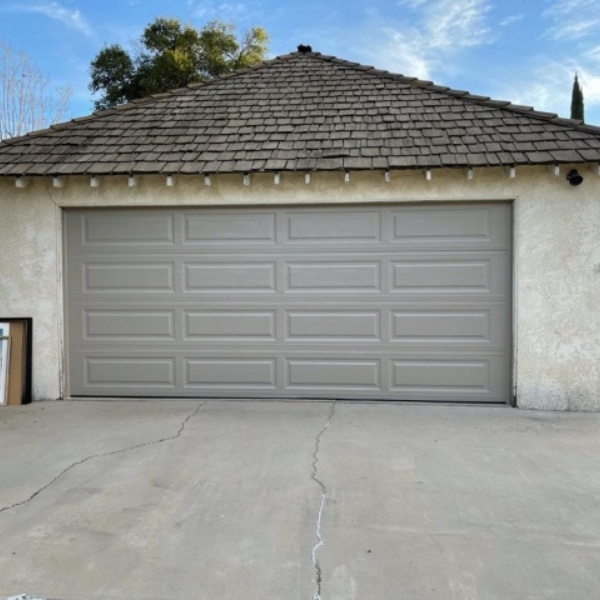
Should I Repair or Replace My Garage Door?
Repair is often practical when the door is relatively young, the frame is sound, the damage is limited, and replacement parts are readily available. A new spring, roller set, cable, sensor, or opener can lengthen the service life of an otherwise reliable door.
Replacement may make more sense when the door has repeated failures, widespread corrosion, warped panels, poor insulation, obsolete hardware, or significant structural damage. Also consider the garage door replacement cost, which often ranges from approximately $1,000 to $4,500 or more for a standard residential installation. Custom wood, high-end steel, specialty glass, oversized doors, and extensive framing work can be considerably more expensive.
For a two-car opening, estimates are often described as the 2 car garage door replacement cost or https://emgaragedoorsandgateservice.com/blog/garage-door-curb-appeal-value.html two car garage door replacement cost. A typical double-width replacement may range from approximately $1,500 to $5,000 or more, depending on construction, insulation, windows, design, removal, and installation. Request a complete quote rather than assuming a larger door will cost exactly twice as much as a single door.
Energy efficiency is another consideration. An insulated garage door can decrease heat transfer into rooms beside or above the garage, improve comfort, and feel more substantial during operation. However, insulation alone does not guarantee major savings if the garage is unconditioned or poorly sealed.
How Do Age, Damage, and Appearance Affect the Decision?
Look closely at rust, warped panels, cracked seals, loose fasteners, and repeated alignment problems. Homes near the Pacific, including Santa Monica, Venice, and the South Bay, may experience marine-layer moisture and salt exposure that accelerates corrosion on springs, cables, tracks, and other hardware. Surface rust may be manageable, but deep corrosion can compromise parts and shorten the life of a repair.
EM Garage Doors And Gate Service Inc19629 Cantara St, Reseda, CA 91335
(818) 919-0785
https://emgaragedoorsandgateservice.com/
https://maps.app.goo.gl/XujLWxA4pAQKARQT8
34.2193569, -118.5613022
In hotter inland areas such as the San Fernando Valley and parts of the San Gabriel Valley, heat can place additional stress on lubricants, weather seals, batteries, and opener components. A deteriorating weather seal allows dust, pests, and heat to enter while making the door less pleasant to operate around.
Appearance also matters. A damaged front-facing garage door can reduce street appeal, particularly when it takes up a significant area of the home’s street elevation. If the current door has poor insulation, outdated windows, or a design that does not complement the property, replacement may enhance appearance and function at the same time.
How Can I Find Garage Door Repair Near Me in Los Angeles?
Look up garage door repair near me, then confirm that the businesses you review actually serve your neighborhood and the nature of work you need. Coverage may include areas such as Downtown Los Angeles, Hollywood, the Westside, the San Fernando Valley, or the South Bay, but no provider should suggest universal coverage without confirming availability.
Hire a licensed contractor or local technician who can determine the door brand, describe the repair, and provide a written estimate before substantial work begins. For urgent failures, ask whether same-day service is genuinely available and whether the quoted price applies during the time you need assistance. Same-day garage door service may carry a premium, particularly outside regular business hours.
Examine reviews for details about punctuality, communication, clean installation, and follow-up—not just star ratings. Confirm the company’s business identity, payment terms, and warranty policy. A professional should not urge you to authorize full replacement before explaining whether repair is safe and technically possible.
What Should I Ask a Los Angeles Garage Door Company?
Ask for a written estimate that lists the failed components, proposed replacement parts, labor, service call fee, taxes, and any emergency surcharge. Confirm whether the estimate is fixed or subject to change after disassembly. If the door is old, ask whether replacement parts are original, compatible aftermarket components, or refurbished items.
Confirm the parts warranty and labor warranty separately. Ask how warranty service is requested and whether coverage is transferable. You should also verify that the company is licensed and insured and ask for proof when appropriate. Insurance is particularly important when technicians are working with heavy doors, ladders, electrical connections, or high-tension springs.
For opener replacement or modifications, confirm current City of Los Angeles or relevant local jurisdiction requirements for permits, electrical work, structural changes, and California safety compliance. Requirements can vary by location and project scope, so homeowners should confirm them with the appropriate authority rather than relying on an informal verbal assurance.
What Garage Door Safety Inspections Can Homeowners Perform?
Homeowners can perform basic visible and operational checks without touching springs, cables, or other high-tension parts. Keep people, pets, vehicles, and stored items away from the door’s travel path. Inspect the photo-eye sensors for dirt or obstruction and check that their indicator lights appear normal. Do not bypass the sensors if the garage door will not close.
Test automatic reversal by placing an appropriate solid object, such as a piece of wood recommended by the manufacturer, on the floor beneath the closing door. The door should reverse after contacting it. Follow the opener manufacturer’s instructions, and do not stand beneath the moving door. If automatic reversal fails, disconnect use and arrange qualified service.
Inspect the emergency release cord only to understand its location and operation. With the door fully closed, pull it as directed by the manufacturer and try to move the door carefully by hand only if there is no visible damage and no spring or cable problem. Never test this on a door that is crooked, heavy, stuck halfway, or visibly broken.
Basic garage door maintenance includes cleaning sensor lenses, checking the weather seal, listening for a new noisy garage door, and observing whether the door moves smoothly. Preventive maintenance by a qualified technician can identify worn rollers, loose cables, track damage, and balance problems before they become an emergency. Do not lubricate springs, tracks, or opener components indiscriminately; use the product and method recommended for each part.
Garage Door Repair Answers
How much does Garage door repair cost in Los Angeles?
Many residential repairs cost approximately $100 to $500, while a service call may be about $75 to $150. Spring, opener, track, cable, and panel work can fall outside those ranges. The final price depends on labor and parts, door size, accessibility, urgency, and the condition of related components. Obtain an itemized repair estimate before authorizing work.
How much does it cost to replace a garage door spring?
Professional spring replacement often costs approximately $200 to $500 for a typical residential door. The price varies with the spring type, door weight, number of springs, access, and warranty. A torsion spring and an extension spring require separate installation procedures. Never choose a spring only by appearance or attempt to wind one without proper training and equipment.
Is it more affordable to repair or replace a garage door?
A repair is usually more affordable when one component has failed and the door is otherwise structurally sound. A new door may provide more cost-effectiveness when the door has extensive rust, bent panels, ongoing breakdowns, poor insulation, or replacement parts that are unavailable. Evaluate the repair total with the garage door replacement cost, including setup, old-door removal, disposal services, hardware, and any needed electrical or structural work.
How do I find reliable garage door repair near me?
Look for a local company with a verifiable business identity, valid licensing, insurance, open communication, and relevant experience with your door type. Request a written estimate, parts warranty, labor warranty, and arrival window. Verify whether the provider offers same-day service or emergency garage door repair in your Los Angeles neighborhood, since coverage can differ across Downtown, Hollywood, the Westside, the Valley, and the South Bay.
Is it safe for me to repair a broken garage door spring myself?
In most cases, no. A broken garage door spring stores serious energy, and improper removal or installation can cause major injury, property damage, or an unstable door. Do not use makeshift tools, cut cables, or force the opener to lift the door. Keep the area clear and contact a professional technician for diagnosis, spring replacement, balance testing, and safety inspection.